


Commercial -
Metropolitan centrepiece grounded in growth
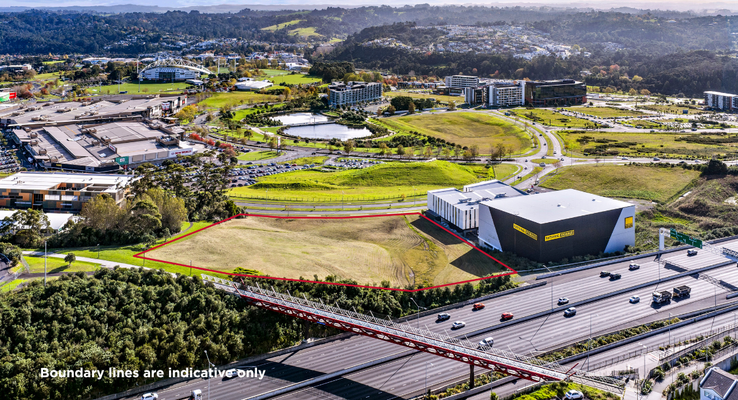
A development-scale landholding in one of Auckland’s most established metropolitan centres is being brought to market with existing design and due diligence material, offering developers, institutional capital and housing providers a rare opportunity to secure substantial scale within the tightly held Albany precinct, Bayleys brokers say.
Bayleys Land Development Sales director, Wesley Gerber, together with colleague Michael Nees, is marketing the 1.59ha (more or less) property at 80 Don McKinnon Drive for sale by deadline, closing at 4:00 pm on Thursday, 25th June 2026 (will not be sold prior).
Zoned Business – Metropolitan Centre and Albany Centre Sub-precinct A, the site benefits from a planning framework that supports a broad range of higher-density residential outcomes, including apartment living, terraced housing, and high-density redevelopment. An historic townhouse resource consent further underpins the property’s residential development potential.
Gerber says the property is being offered to the market as Auckland’s urban land sector shifts, with large-scale brownfield opportunities in established metropolitan centres becoming increasingly scarce.
“Opportunities of this scale within Auckland’s existing urban footprint are becoming harder to secure, particularly where surrounding transport infrastructure, retail amenity and employment catchments are already established.
“As construction feasibility and funding conditions improve, developers are increasingly focused on sites that offer planning clarity, infrastructure readiness and long-term residential demand fundamentals – all of which are firmly in focus here in Albany.”
The property occupies an elevated and highly connected position between Don McKinnon Drive and the Northern Busway, Westfield Albany, Massey University and wider commercial and civic amenities, while gaining views across Albany Lake Reserve to the North Shore Stadium and scenic hillside.
Gerber says the site’s planning framework creates a more residential-led pathway than many metropolitan centre opportunities, reducing reliance on large-scale retail outcomes while still retaining flexibility for mixed-use activation.
“Sub-precinct A was specifically designed to support intensive residential living within Albany’s metropolitan centre,” he says. “That creates opportunities across a range of potential outcomes, including apartment development, build-to-rent, staged delivery, affordable housing or mixed-use schemes, subject to investigation and consent.”
Population projections support Albany’s long-term residential demand outlook, with the Upper Harbour catchment expected to add nearly 16,000 residents over the next decade.
The property also benefits from a substantial body of existing design and due diligence material, including prior consent documentation and Architectus studies exploring apartment-led development outcomes.
Bayleys North Shore Commercial director, Michael Nees, says this significantly reduces the early-stage feasibility assessment for potential purchasers.
“There’s meaningful value in the amount of planning and investigative work which has already been undertaken. The availability of previous design studies and consent material provides a strong reference point for developers and capital partners reassessing opportunities against current construction dynamics, funding markets and housing demand.”
Albany has evolved considerably over the past two decades, transitioning from a suburban retail node into one of Auckland’s key northern metropolitan centres, supported by substantial public and private infrastructure investment.
The completion of the Northern Corridor Improvements, the extension of the Northern Busway, and improved connectivity to State Highways 1 and 18 have further strengthened Albany’s role as both a residential and employment hub within the wider North Shore corridor.
Gerber says large-scale metropolitan landholdings – particularly those benefitting from precinct provisions that enable full residential intensification without mandatory mixed-use requirements – are becoming increasingly strategic within Auckland’s tightly constrained urban environment.
“Developers are moving for opportunities where scale, zoning and infrastructure alignment already exist. Sites like this – with high-density zoning, transport connectivity, established surrounding amenity and genuine development scale – create a compelling long-term platform within one of Auckland’s most established growth centres.”
Contact us


