


.jpg)
Residential -
Residential Development Market Recovery
Why New Zealand’s next generation of residential development is taking shape before the market fully recovers.
Residential Sales Activity is Improving
The clearest signal that New Zealand’s residential development market is turning isn’t rising prices – it’s operators preparing to build.
Across the country, previously shelved projects are being brought back into active planning. Feasibility is being recalculated, consented schemes are being reworked, and product mixes are being refined to suit a buyer landscape that looks very different from the one in which many of these developments were originally conceived.
Residential sales volumes have normalised, developer confidence is improving, and building consents are beginning to lift. Yet pricing remains restrained, with land values and completed housing held in check by an elevated supply pipeline and disciplined lenders, investors, and banks are being cautious about where they allocate capital.
Those conditions, however, are creating an unusually attractive window for well-prepared stakeholders.
Bayleys Projects national director, Suzie Wigglesworth, says the developers making the greatest progress today aren’t waiting for perfect conditions – they’re adapting to them.
“We’re seeing operators revisit projects with a fresh perspective, refining layouts, reassessing density and improving feasibility so developments better align with today’s purchasers rather than yesterday’s assumptions.” That evolution is becoming one of the defining characteristics of New Zealand’s next development cycle.
BUILDING DIFFERENTLY
Projects returning to market may be familiar in name, but many have evolved substantially. Apartment schemes are incorporating hotel or branded-residence components, densities are being recalibrated, and staging programmes are being reworked to reflect contemporary construction economics and purchaser demand better.
“The emphasis has shifted from maximising yield to delivering projects that can withstand market cycles.
Rather than relying on rising markets to carry projects forward, developers are building stronger fundamentals into projects from the outset,” Wigglesworth says.
Research in Bayleys’ latest New Zealand Land Market Update illustrates that transition, identifying a clear shift towards standalone homes and duplex housing in suburban locations as developers respond to changing purchaser preferences.
INFRASTRUCTURE HAS BECOME THE DIFFERENTIATOR
If feasibility is the gateway to development, infrastructure has become the map.
“Infrastructure has become one of the first filters in development decision-making. Servicing capacity, transport investment and community amenity are now influencing site selection as much as land value itself,” says Wigglesworth.
Nowhere is that evolution more evident than in Auckland.
The imminent completion of the City Rail Link represents more than a transport project. It signals the continued maturation of New Zealand’s largest city, supporting greater investment, urban renewal and confidence in well-located residential communities. As connectivity improves and the city centre strengthens, demand for premium housing in established city and fringe neighbourhoods is expected to deepen.
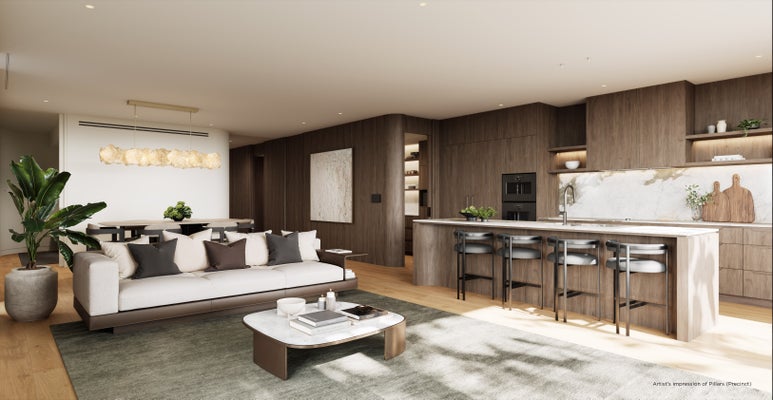
Positioned along the ridgeline between Freemans Bay and St Mary’s Bay, Precinct Properties’ dual-building project Pillars demonstrates how scarcity has reasserted itself as one of Auckland’s most valuable residential attributes, with buyers increasingly seeking premium homes in established neighbourhoods where connectivity, amenity and architectural quality converge.
Wigglesworth says demand for Pillars has remained steady, reflecting continued buyer appetite for thoughtfully designed homes in tightly held inner-city locations.
Auckland’s growth story is equally evident at its metropolitan edge, where infrastructure is shaping an entirely different type of residential opportunity.
“Further south, Karaka Village demonstrates a different form of infrastructure-led growth. As neighbourhood amenities continue to expand – including the forthcoming Four Square supermarket - the master planned community is reaching critical mass, increasingly sought by purchasers looking for complete neighbourhoods rather than standalone subdivisions.”
LIFESTYLE MARKETS CONTINUE TO EVOLVE
Few regions illustrate New Zealand’s residential evolution more clearly than the Southern Lakes, which has evolved beyond its seasonal home market.
Increasingly, professionals, families and long-term investors are choosing the region as a permanent base, attracted by lifestyle, connectivity and a year-round economy that continues to diversify.
That maturity is influencing both the scale and ambition of new developments.
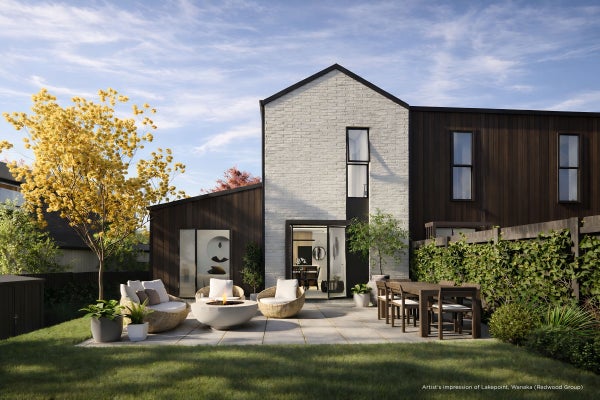
Wigglesworth says Lakepoint, Wānaka – a master planned residential community by Redwood Group, is a response to demand for permanent homes and investment-quality residences within one of New Zealand’s fastest-growing lifestyle destinations.
The project also reflects how operators are increasingly creating communities rather than simply delivering housing.
BUYERS ARE DRIVING BETTER DEVELOPMENT
Developers aren’t the only ones who have changed. Buyers have, too. They are more informed, selective and considerably less willing to compromise.
They place greater value on architecture, sustainability, neighbourhood amenity and long-term liveability, rewarding developments that demonstrate thoughtful planning rather than simply maximising density.
Bayleys Residential Projects general manager, Gavin Lloyd, says buyer expectations are reshaping development from the earliest stages of project planning.
“The projects coming to market today are stronger because they’ve had time to evolve. Developers have refined layouts, improved amenities, and responded to changing buyer expectations. That’s producing better communities and, ultimately, better long-term outcomes.
“For purchasers, that creates an opportunity. Rather than buying into projects conceived during a rising market, they’re increasingly choosing developments that have benefited from several years of refinement. Better design and more disciplined planning are becoming competitive advantages rather than optional extras.
“Those aren’t the hallmarks of a market waiting for recovery – they’re the foundations of one already preparing for growth.”
“This feels like a healthier cycle,” Wigglesworth agrees. “It’s being built on stronger fundamentals, more disciplined decision-making and a genuine focus on creating places people want to live. That’s encouraging for developers, for buyers, and the long-term quality of New Zealand’s residential market.”
For those watching closely, the message is increasingly clear: the next generation of residential development isn’t waiting for the market to arrive. It’s already taking shape.
Explore the latest issue of New Build magazine to discover new build properties and development opportunities for sale across New Zealand.
Contact us


