


Rural -
The cycle doesn’t wait
What the data says about rural property timing and what vendors with a three-to-five year horizon need to know.
The rural property market runs on two things: liquidity and confidence. Right now, both are present. That doesn't happen often, and it doesn't last.
Overlay dairy farm sales volumes against the Fonterra payout and interest rates over the past two decades and the correlation is clear: transaction activity tracks those two variables, every time. In the year to March 2025, after a strong payout and easing rates, total dairy farm sales volume lifted 73% to 204 transactions. Total sales value increased 90%, from $610 million to $1.15 billion in a single year. The most recent REINZ data shows dairy sales up a further 38% in the 12 months to March 2026, with more transactions exceeding $10 million than in any equivalent period since records began in 1997.
The cycle is real. Timing is everything. The data confirms that every sector follows the same pattern. Hill country pastoral grazing land that was ripe for forestry and carbon conversion a year ago at $14,000 to $17,000 per hectare and now subject to Land Use Classification rules now trades in the $8,000 to $10,000 range. Honey, avocados, viticulture; every sector has had its run. Every sector has come off a high, as night follows day.
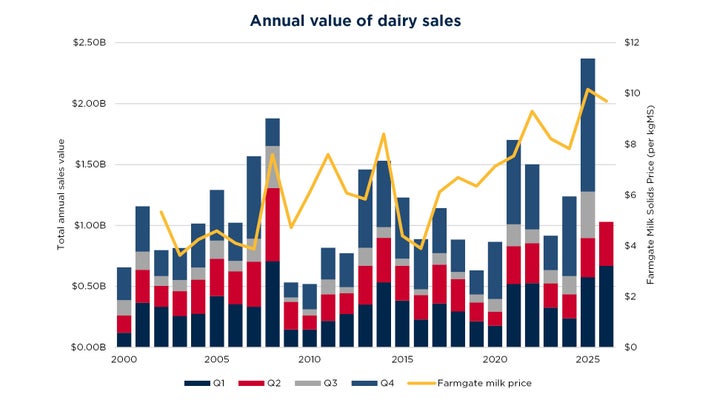
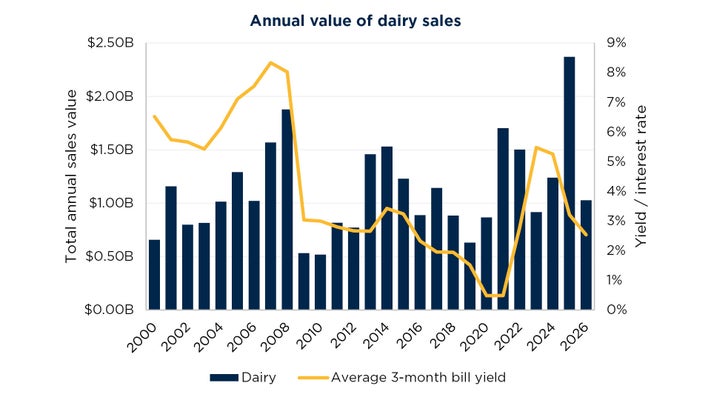
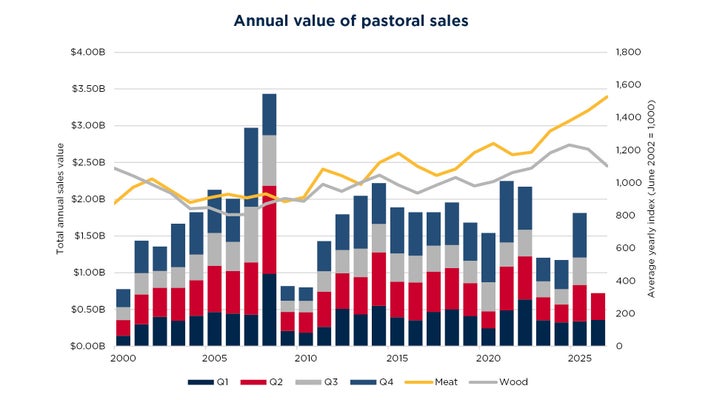
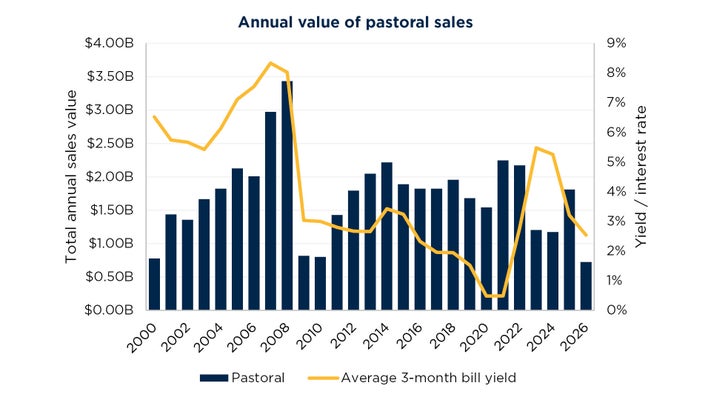
Data: REINZ (dairy, livestock and dairy support), Fonterra, DCANZ, RBNZ and Stats NZ. Sales data current to 30 June 2026.
The window is open and the supply side is constrained
Buyer depth right now is genuine and broad. Family units and corporates are doubling down on dairy expansion. Off-farm capital is seeking land exposure. Overseas investors are tracking the New Zealand protein story. The world needs food and we are not making more land. Rates have eased, lender appetite for quality rural assets has returned, and buyer pools across Waikato, Canterbury, and Southland are active and competitive.
The supply side, however, is constrained. Vendors are comfortable. Farmers sitting on strong payouts are doing the maths: another season of returns looks compelling and coming to market is not front of mind. That is a rational position up until the cycle turns and the buyer pool that exists today has moved on or tightened its criteria. In twelve months, that cohort may have redeployed capital or found other opportunities. The window for seamless execution is genuinely narrow and it doesn't announce when it's closing.
The 12-month selling season has replaced the spring selling season
The old calendar no longer holds. Dairy used to settle on 1 June. Horticulture moved after harvest. But that model is gone. Accountants and legal teams have built the frameworks to manage mid-season transfers and crop-on arrangements. We transact all year round now.
There is still a presentation argument for spring. Farms look better when the grass is in and stock are in good condition. But that is a staging consideration, not a strategic reason to hold. Calving starts again within weeks. After a six to eight week calving programme, farms move straight into mating. For the next two to three months, farmers go operationally heads-down and the bandwidth to run a credible sales process compresses significantly. The buyers are active now. The question is whether vendors are.
For vendors with a three-to-five year exit horizon, the question isn't whether now is perfect, it's whether conditions will be better if you wait
New Zealand has an aging farmer base. The succession challenge is real, and consistently underestimated not in intention, but in timing. Farmers who know they need an exit in the next three to five years too often extend by another season. The growth mindset that served them well becomes the thing that puts them on the wrong side of the cycle.
The vendors who navigate cycles well are not the ones who wait for certainty. They are the ones who understand where they are in the cycle and make a move while conditions are working in their favour.
The cycle is real. The data confirms it. The window is open now.
Example? Pikarere Farm in Porirua illustrates what's possible outside the seasonal window. A 742-hectare sheep and beef property, held by the same family for more than seventy years, with six kilometres of Cook Strait coastline thirty minutes from Wellington's CBD. The transaction required Bayleys to work simultaneously across rural and commercial networks. We matched a productive farming enterprise with a buyer pool that spanned pastoral investors, lifestyle purchasers, Iwi and capital-city interests. That cross-market reach is exactly what complex rural transactions demand.
.jpg?height=400)
.jpg?height=400)
Author - Duncan Ross
Chief Operating Officer and National Director Rural
As COO for Bayley Corporation, Duncan oversees the execution of Bayleys’ wider company operational and strategic activities, monitors productivity and results, and helps facilitate the “Altogether Better” philosophy that underpins Bayleys’ business.
Contact us


