


What the 2026 election means for rural landowners
The farm policy on the table this election, what it could mean for land, and why the market you're in today still matters most
Every election year, the same thing happens in rural property. Vendors go quiet, thinking, "Let's see who gets in." Listings that were ready in August get parked until the new year.
This year the nerves are real, even though the numbers are good. Federated Farmers' latest Confidence Survey found 72% of farms are profitable, the highest since 2016 and yet the election ranked as farmers' second-biggest concern, behind input costs.
So it's worth being clear about the market we're actually in. Commodity prices are good. Farm revenues are good. And we have more buyers than we've ever had.
Take Kyle Park, at 191 Lambies Drive, Rakaia. Fourteen parties showed interest. Five parties bid, 70 times between them. It went to auction with a reserve of $25.675 million and sold for $34.4 million, $8.725 million over reserve, at $87,241 a hectare. That set a new benchmark for Canterbury dairy, lifting regional values by around $10,000 a hectare.
Look at where the under-bidders stopped: one at $30 million, two at $33 million, one at $34 million. Add the buyer, and more than $160 million of capital chased a single farm. Kyle Park wasn’t a one-off. In another Canterbury auction room this winter, six under-bidders chased a dairy farm to $13.8 million, with seven more parties behind them holding bank funding to $12 million.
REINZ data shows dairy farm sales up 38% in the year to March 2026, with more $10 million-plus transactions than any comparable period since 1997. An election doesn’t change what’s in those buyers’ accounts.
We put this piece together for our own agents and managers. It seemed just as useful for the people they work with. It’s not a forecast of who wins but rather a plain account of the farm policy on the table, and what it could mean for land.
On farmland, the big two have rarely agreed more
At the Rural Issues Debate at Mystery Creek, National, Labour and ACT all committed to no new taxes for farmers. Labour's 28% capital gains tax, due from July 2027 if it wins, exempts farms, the family home and lifestyle blocks. The coalition and Labour have both ruled out a methane tax. And Christopher Luxon and Chris Hipkins have each ruled out supporting Opportunity's proposed farmland tax.
For the value of a productive farm, that's about as close to a bipartisan floor as rural New Zealand gets.
Why the smaller parties matter
Every government since MMP began has been a coalition, and the polls point to another. That gives smaller parties real leverage. Rule-outs on the campaign trail are positions, not guarantees. Once the votes are counted, everyone negotiates.
In 2023, it took nearly six weeks to form a government. A close result this year could push the details well into the new year. Not every policy below will survive. Some will.
Emissions pricing and trade
This is the issue with the most at stake because it touches both what a farm costs to run and where its product can be sold.
The coalition removed agriculture from the ETS, cut the 2050 methane target to 14–24% below 2017 levels, and ruled out a methane tax. Labour has also ruled out a methane tax. The Greens would price agricultural emissions through the ETS, and Opportunity proposes a cap-and-trade market or levy on biogenic methane. Both could be coalition partners.
The case against pricing holds. You have to be in the black to be green. Farmers making money fence waterways and invest in better systems. Science still can’t reliably measure emissions farm by farm. Price them anyway, and the money that would have gone into improvements goes on the levy instead. The cost doesn't stop at the farm gate either. It flows through to shoppers.
Trade cuts the other way. We sell most of what we grow offshore and many trade relationships assume we're pulling our weight on climate. Dutch group Both ENDS has complained to the European Commission that New Zealand has broken two commitments in its EU free trade agreement, which the Government denies. For an export sector, market access is part of what a farm is worth.
Carbon forestry
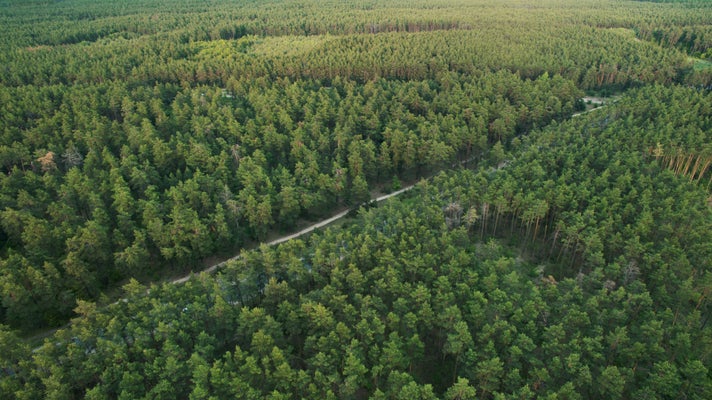
Every major party now agrees too much productive farmland has gone into exotic carbon forestry. Since last October, only the steepest class 7 and 8 land can be registered in the ETS without restriction. Labour would pause new forestry registrations and stop whole-farm conversions. The Greens would take forestry out of the ETS entirely.
The class 7 and 8 reset was sensible. Farmers no longer have to outbid carbon investors for productive land, and it shows. Hill country that traded at $14,000 to $17,000 a hectare for conversion now sits at $8,000 to $10,000. We've even seen the trade start to run the other way. 3558 Tiniroto Road was a working farm until its previous owners planted all 374 hectares in pine and registered it in the ETS. Two local farming families have now bought it, with trees just two to four years old, to run cattle. They'll use the stock, along with other methods, to clear the pines and bring it back into pasture.
That doesn't mean farm forestry has no place. Right tree, right place. Timber alone means waiting 25 years for a thin return. Carbon income is what lets a farmer with 360 hectares plant the 70 hectares of steep country that suits trees. Taking forestry out of the ETS would remove that option. Whoever wins, the whole-farm conversion buyer isn't coming back. Hill country will be priced as farmland, with trees where they fit.
Land value tax
Opportunity's annual land tax has the most direct link to farm values. It proposes 0.5% a year on the unimproved value of rural land, funding a Citizen's Income of more than $19,000 for most adults. Federated Farmers puts the cost at about $40,000 a year for an average sheep and beef farm and $27,000 for dairy. Beef + Lamb's modelling shows South Island high country about $41,300 a year worse off per couple once the Citizen's Income is counted, while some North Island hill country and South Island finishing farms come out slightly ahead.
The party has offered exemptions for conservation land and for drought or low-price years. Even so, it taxes what land is worth rather than what it earns, and a tax like that gets priced into what buyers will pay.
What counts as a family farm
Farms are carved out of both left-bloc tax proposals. The question is what counts as one.
Labour's capital gains tax exempts farms actively worked by their owner, but Labour hasn't given a firm answer on company-owned farms. The Greens propose a 2.5% wealth tax on net assets over $10 million, which they say would touch about 2% of farms, and a tax on inheritances over $1 million. Both exclude the family farm.
None of these terms is defined in law, and real farming businesses don't fit neat categories. Is a family operation holding $100 million of property a family farm or a corporate? What about a second farm bought to consolidate, or a dairy grazing farm with a kiwifruit orchard on part of it, like one we're marketing now? The family corporates doing much of the buying in Canterbury hold land through companies and trusts. Where the line falls decides whether these taxes apply, and in a sector where most land changes hands inside families, it goes straight to succession.
There's also the money coming off the farm. Earlier this year I wrote that roughly half of farmers would put their Fonterra capital return beyond dairy, including into commercial property in the towns they know. That move sits inside Labour's capital gains tax from 1 July 2027. A farm supply store on a rural main street still works for the same reasons it did in June. But if you're selling and redeploying, the order of those moves now carries a tax dimension. Get your accountant and your agent in the same room before the rules are written.
Freshwater
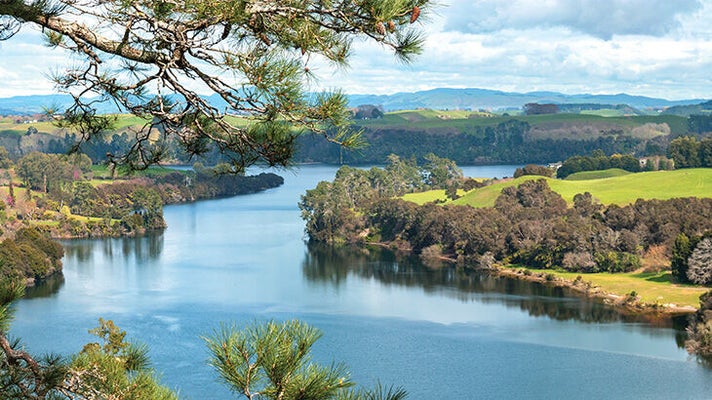
For dairy, this is where a change of government would bite fastest. Labour would revisit the 2020 freshwater rules. The Greens would cut the synthetic nitrogen cap for dairy from 190 kg/ha to 125 kg/ha and manage stocking rates catchment by catchment. The coalition has paused Waikato’s Plan Change 1 until 2032, which a different government could revisit.
Stocking rates set carrying capacity, and carrying capacity sets what a dairy farm is worth. Buyers in sensitive catchments are already pricing that risk.
The farms best placed are already working with their catchment rather than waiting on Wellington. Catchment Communities Aotearoa backs the local groups doing that work, with the science behind them. That’s why Bayleys sponsors them. Governments will keep changing freshwater rules. A catchment that’s already doing the work doesn’t have to wait and see.
Fonterra and Zespri
NZ First wants processors investing in new value-added production to get access to up to 500 million litres of Fonterra milk a year, and a review of Zespri's export monopoly. National and ACT oppose politicians intervening in farmer-owned companies.
The strength of our rural economy right now is dairy, built on one dominant co-operative, and kiwifruit, built on a single marketer that controls how the world sees our fruit. Zespri's single desk is part of what buyers pay for in an orchard. Any change would show up in orchard values.
Elsewhere, there's broad agreement. The new resource management laws have passed and Labour won't repeal them. Solar on farms has cross-party support. And a bill to let first-home buyers use KiwiSaver to buy a farm is a good idea, whoever takes it forward.
What to do before the vote
None of this needs an election result to act on.
Start with structure: who owns the land, who farms it, and through what entity. That decides how any of these policies would land on you.
Know your numbers on the terms buyers are using: $/kgMS, cost structure, water security, nitrogen headroom, reliability through a dry year. A farm that shows those clearly holds up through any change of government. And if you're inside a three-to-five year exit horizon, get your advisers talking now. Waiting another season used to be market risk alone. This year it carries policy risk, too.
The market isn't waiting
Fonterra has lifted its 2026/27 forecast midpoint to $9.50/kgMS. That's a strong season by any measure. Rates are going the other way: the Reserve Bank lifted the OCR in July for the first time in three years, and the next review lands on 28 October, ten days before the vote. Buyers with funding approved today are working off today's numbers.
Spring listings are landing now, while farms present at their best. Park a listing until February and you're presenting in autumn, to buyers who've had three more months to put their capital somewhere else.
Pick your timing. Don't let Wellington pick it for you.
There's a kaleidoscope of possible outcomes from this election. You can only deal with the market you can see and the one we're in today is strong. Commodity prices are good. Farm revenues are good. And there are more buyers than we've ever had.
Nobody can predict how coalition talks will play out, or when. The details may not be settled until the new year. If you're thinking about selling, that's a long time to sit out a market this strong.

Author - Duncan Ross
Chief Operating Officer and National Director Rural
As COO for Bayley Corporation, Duncan oversees the execution of Bayleys’ wider company operational and strategic activities, monitors productivity and results, and helps facilitate the “Altogether Better” philosophy that underpins Bayleys’ business.
Contact us


