


Total Property -
Beyond the next three years
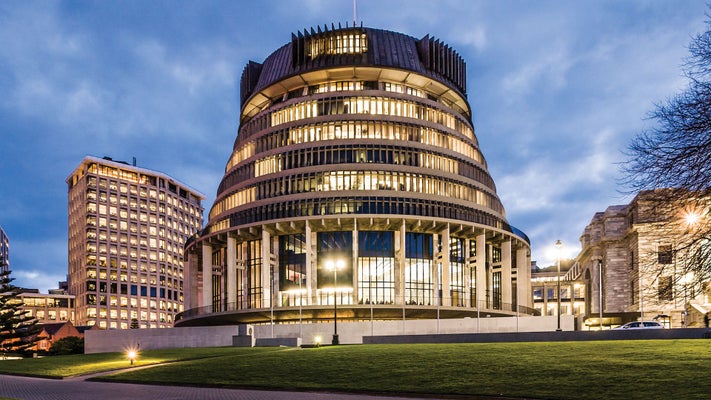
Political parties and industry leaders set out the reforms, investment and infrastructure priorities they believe New Zealand needs to remain competitive.
As New Zealand heads towards the 2026 General Election, the commercial property sector is looking for policy settings that provide confidence, certainty and a clear pathway for growth.
While elections can shift priorities, the property sector depends on reforms that endure beyond a single parliamentary term. Total Property sought perspectives on the policies needed to unlock development, attract investment and support sustainable economic growth, and asked Property Council New Zealand chief executive Leonie Freeman what it will take to give investors and developers the confidence to keep capital moving.
Simon Watts
Minister for Building and Construction, National
National is focused on creating the right environment for businesses and investors to get on with building and investing in New Zealand. We're cutting unnecessary red tape, improving consenting processes, increasing competition in building products, and lifting productivity across the construction sector.
If re-elected, National will further streamline commercial development by formalising the role of producer statements in the Building Act. Qualified engineers will be able to sign off eligible building work, reducing unnecessary inspections and delays. We will also establish a specialist Building Consent Authority for large commercial developments, providing a nationally consistent pathway with access to specialist expertise.
We are already progressing reforms through the Building Amendment Bill to streamline consenting, boost productivity, and improve collaboration between Building Consent Authorities. We are also introducing self-certification for trusted practitioners such as plumbers and drainlayers, and reforming earthquake-prone building settings so more buildings can be strengthened, upgraded, and brought back into productive use.
A re-elected National government will make it easier to build shops, offices and other commercial buildings by formalising producer statements in the Building Act. Where statements from qualified experts meet prescribed requirements, Building Consent Authorities will be required to accept them as evidence that work complies with the Building Code.
National will also designate a specialist Building Consent Authority for large and complex commercial projects. This will provide developers with a single, nationally consistent consenting pathway, reduce dependency on specialist expertise within individual councils, and free up local authorities to focus on residential and standard consents.
These changes will help get major projects moving faster, reduce unnecessary costs, and support economic growth.
We see economic growth and sustainability as working hand in hand. By supporting practical measures that boost productivity and reduce costs, we can deliver both.
National is legislating to fast-track building consent for residential dwellings with solar panels or sustainable building designs by requiring consents to be processed in 10 days instead of 20. This will be an important incentive for developers to use more sustainable building designs while also helping lower cost and speed up the consenting process.
We have removed the requirement for rooftop solar panels to have a building consent, making it more affordable and straightforward for families to take up solar.
My objective is to make building and construction more affordable by reducing compliance costs and delivering reforms that simplify what can be built, where it can be built, and who can build it.
National is committed to fixing the basics and, quite literally, building New Zealand's future. Through our Going for Growth agenda, we are improving infrastructure delivery, streamlining consenting, expanding access to building products, and lifting productivity across the sector.
We are also progressing reforms to provide large commercial developments with access to specialist consenting expertise through a dedicated Building Consent Authority.
These changes will provide greater certainty, get quality projects moving sooner, support skilled jobs, and ensure New Zealand has the homes, workplaces and infrastructure needed for a growing economy. The result will be a more affordable, resilient and productive construction sector that delivers for New Zealanders.
Arena Williams
Labour Party spokesperson for Building and Construction
Labour Leader Chris Hipkins has made clear what is at stake in this election: three more years of stop-start infrastructure projects and economic hardship under a weak and chaotic National-New Zealand First-ACT Government, or a better future led by Labour. While National is making things worse, Labour is disciplined, ready for Government, and has a clear vision of more jobs, affordable healthcare, and lower household bills, so everyone can build a future here at home.
Building and construction is a good example of the choice at this election. In 2023, when Labour was in Government, one in 10 kiwis worked in the sector, which is the backbone of jobs, infrastructure, and cost of living across New Zealand. When it slows, everything slows, from housing and productivity, to regional growth, and opportunity for young people, many of whom have fled to Australia under this Government. What’s happening to the building and construction industry today is directly the result of this Government's stop-start infrastructure policy decisions. More than 20,000 jobs have been lost in construction. Major firms are reporting weak demand, thinner pipelines, and margin pressure. Builders are dealing with high input costs, and fixed price contracts that squeeze margins. The recent fuel shock is making the situation worse. By contrast, under the Labour Government during COVID, building and construction was treated as a critical industry.
Labour moved quickly to get sites operating safely again, because we knew stopping the sector would have long-term consequences. Labour backed the pipeline, with infrastructure investment and public projects to keep people in work. Labour supported firms to stay viable, so they could keep apprentices and skilled workers.
Labour will release its full suite of infrastructure, economic and building and construction policies before the election, but the contrast is clear. Chris Luxon’s weak leadership resulted in chaotic cuts to infrastructure projects which tanked the economy. Labour, as Finance Spokesperson Barbara Edmonds MP has said before, will work with industry and the sector to rebuild confidence and develop a more enduring and stable infrastructure pipeline that also acknowledges the far-reaching impacts of climate change and reflects the needs of communities.
Cameron Luxton
ACT spokesperson for Building and Construction, Infrastructure, and Local Government
Commercial property succeeds when businesses are confident enough to need more space. The sector does not need another complicated scheme or subsidy. It needs an economy where people are willing to invest, build and sign leases.
ACT has spent this term making New Zealand less hostile to investment. We helped make this a Government of no new taxes, more than doubled the speed of overseas investment decisions, from 71 to 28 days, and opened the building-products market to tens of thousands of products already approved in trusted overseas countries.
ACT will not introduce any new taxes, and will stop any attempt to impose them on New Zealanders or their investments. Business confidence depends on investors knowing the rules will not be rewritten after they have committed their capital. It also depends on government controlling its own spending instead of adding to inflation and interest rates.
One of the most important changes for commercial property owners is the overhaul of earthquake-prone building regulations. ACT opposed the old system when it was introduced because the costs were wildly out of proportion to the safety benefits. The Government is replacing the blunt %NBS system with one focused on buildings that pose a genuine risk to life. Low-seismic-risk regions will be removed from the regime, councils will be able to grant longer extensions, and owners carrying out strengthening work will no longer automatically be forced to upgrade fire safety and disability access at the same time. The changes are expected to save owners more than $8 billion while still targeting the buildings that present the greatest danger.
The next job is to finish reforming planning and construction. As Parliament’s first and only Licensed Building Practitioner, I know time is money. Every month spent waiting for permission increases the interest bill and can turn a viable development into one that never happens.
ACT will make sure the replacement for the RMA delivers fewer consents and consistent planning rules across the country. Low-impact activities should not require consent, and any conditions imposed should be necessary and proportionate. A low-cost Planning Tribunal designed to resolve straightforward disputes in months rather than years will let owners challenge council overreach without needing a litigation budget.
We would also go further on building consents. Qualified professionals should be able to self-certify work, backed by long-term private insurance. Liability should be proportionate, so each party is responsible for the work it controlled, rather than councils and ratepayers being left as the last party standing.
Infrastructure must arrive with growth, not years later. ACT has already helped reform infrastructure funding and financing so private capital can fund projects and the cost can be repaid over time by the properties that benefit. We want councils to see development as something worth welcoming, rather than another cost to resist.
There is no lasting prosperity in running down the environment, but stopping development is not an environmental policy. ACT supports clear, science-based limits on environmental harm. Once a project meets those limits, it should have a predictable path to approval. We also need abundant and reliable electricity so new industrial developments, data centres and growing businesses can operate competitively.
Our message to investors is straightforward: New Zealand needs people willing to back good projects. ACT will keep pushing to make this a country where sound developments receive prompt answers, infrastructure can be funded, and property rights mean something. That is how we unlock New Zealand’s potential.

Julie Anne Genter
Green Party spokesperson on Building and Construction, Economic Development, Infrastructure, RMA Reform (Built Environment), Transport and Urban Development
Our policy is to:
- Reform market structures in industries that are consistently dominated by large firms, and actively intervene to break up uncompetitive markets, such as the electricity sector with Kiwipower
- Reduce business costs by ensuring we have a long-term, cohesive energy strategy.
- Reduce business costs by investing in climate mitigation and adaptation infrastructure.
- Prioritise locally owned businesses in Government procurement.
- Revitalise Buy Kiwi Made.
- Implement a staggered corporate tax rate so that small businesses pay less, and big multinationals pay more. Improve innovation and entrepreneurship by better advantaging innovative research. We want to do this by providing more assistance to independent and early-career researchers. This includes developing a national research strategy, increasing flexibility in how institutions receive and use funding, and strengthening commercial pathways within public institutions.
All of these policies have the power to improve business confidence, unlock investment and support shared, sustainable growth.
The Green Party has always supported more flexibility in zoning within existing urban areas to enable mixed-use development and increased residential and employment density. We would use development bonuses to incentivise higher standards of energy efficiency, universal accessible design, and public green spaces.
Allowing more development within urban areas means more affordable housing and land prices, more access by sustainable modes of transport and allows us to protect and restore natural ecosystems and highly productive land.
We support public investment in more nature-based solutions when it comes to stormwater systems, and green infrastructure (green roofs, low impact development, etc.) to support climate adaptation as well as healthier environments where biodiversity is thriving within our towns and cities.
We want to make it much easier to make the decisions that are best for people and the planet, to reduce whole-of-life costs and ensure living-wage employment, when it comes to infrastructure and construction.
We all depend on a healthy ecosystem and stable climate to live well. Clean water, clean air, biodiversity and sustainable use of natural resources is a precondition to our communities thriving. The Green Party supports a long-term approach to economic development.
The following Green policies are an opportunity for increased productivity and affordability for all of us in New Zealand:
- Transitioning to 100% renewable electricity and electrifying everything.
- Building more homes and commercial spaces in walkable neighbourhoods linked up by frequent public transport.
- Improving the energy efficiency and sustainability of our buildings, by lifting the building code and using procurement of public building projects to increase best practice and reduce whole-of-life costs.
- Reducing waste in the construction sector.
Fundamentally we have to ensure that the benefits of economic growth are shared and lead to a healthier environment for future generations. We have seen the failure of trickle-down and short-term economics. The Greens would change this.
All of us can work together to make life better for everyone in New Zealand, for the long term. Abundant renewable electricity, heathier and more efficient buildings, and much more efficient transport systems have the potential to vastly improve the quality of life and make it more affordable. Biodiversity and the conservation estate are of great value to the national identity, and we can’t afford to let them languish without protection. The Green Party has always prioritised practical solutions to the long-term challenges we face, and central government has a key role to play in leading the transition to a smart, green economy that works for all of us.
Shane Jones
New Zealand First spokesperson for Building and Construction, Minister for Regional Development, Minister for Resources, Associate Minister of Finance, Associate Minister for Energy
New Zealand First believes commercial property investment depends fundamentally on certainty, confidence and a productive economy. We support a tax system that is simple, predictable and rewards investment and enterprise. We fundamentally oppose a comprehensive capital gains tax, wealth taxes and stamp duties that would create additional uncertainty and costs for property investors.
We also support practical tax reform that recognises the real costs of maintaining New Zealand's building stock, including amending the Capital Limitation Rules to ensure seismic strengthening can be appropriately treated as repairs and maintenance for tax purposes.
Through the Coalition Government, New Zealand First has also secured a select committee inquiry into banking competition, reflecting our concern about the competitiveness and profitability of New Zealand's banking sector and the impact financing costs have on households and businesses.
Our broader economic approach is focused on creating wealth through productive investment, exports, infrastructure and value-added industries. New Zealand First's proposed $100 billion New Zealand Future Fund would support a multi-decade infrastructure build to provide greater certainty around the transport, energy and other infrastructure necessary to unlock commercial and industrial development. We also support strategic investment mechanisms, including the proposed Marsden Point Special Economic Zone, to attract productive, value-adding investment into New Zealand.
New Zealand First's approach to planning, consenting and infrastructure delivery is straightforward: New Zealand must become easier to build in. We supported repealing the previous Government's Natural and Built Environment and Spatial Planning Acts and replacing the complex planning framework with a simpler, more predictable system.
We support faster and more decisive consenting for projects of regional and national significance, including one-stop-shop and fast-track processes where appropriate. The objective should be to remove unnecessary duplication and bureaucratic delay while maintaining clear environmental standards.
New Zealand First also supports practical changes to construction regulation that improve development feasibility, including making it easier to build smaller and more straightforward structures where risks are low - we have amended the Building Act and Resource Consent systems to make it easier to construct granny flats or minor structures up to 70sqm.
Infrastructure investment is equally important. New Zealand First secured $1.2 billion for the Regional Infrastructure Fund and continues to advocate for long-term investment that supports productive resilient regional economies.
Crucially, we have removed co-governance models from local planning to restore democratic, predictable, and fair decision-making, and we will legislate that councils can only charge rating differentials to businesses if evidence of differential costs can be demonstrated.
New Zealand First rejects the false choice between economic development and environmental protection. Our approach is one of pragmatic environmentalism: pursuing practical, evidence-based environmental outcomes without allowing ideology or unnecessary bureaucracy to prevent productive development.
Developers must remain responsible for avoiding, remedying or mitigating genuine adverse environmental effects. However, a clear and efficient regulatory system is preferable to one in which sustainable commercial, industrial and infrastructure projects face years of uncertainty.
Our approach also recognises that energy security, infrastructure resilience and environmental sustainability must work together. Policies such as our “right tree, right place” approach demonstrate the importance of protecting productive land while pursuing environmental objectives sensibly.
Our message is simple: New Zealand needs investment, development and productive enterprise.
Over the next three years, New Zealand First will continue to advocate for greater regulatory certainty, faster consenting, fairer and more predictable taxation, competitive financing and long-term infrastructure investment.
Commercial property is not simply about buildings. It provides the factories, warehouses, offices, ports, energy facilities and commercial centres required for New Zealand to grow its productive capacity. Our focus is therefore on certainty, stability and growth – creating the conditions in which investors can acquire, develop and expand with confidence, while helping build a more prosperous and self-sufficient New Zealand.
David Bainbridge-Zafar
Opportunity spokesperson for Housing and Infrastructure
Opportunity will transform New Zealand’s investment environment through our Tax Reset, shifting capital away from passive land speculation and directly into the productive economy. By introducing a 1.75% Land Value Tax (LVT) on urban land while leaving building improvements untaxed, we reverse the incentive to land-bank. Commercial property owners who actively develop, upgrade, and construct high-density assets will be rewarded, as tax falls on underlying land rather than capital improvements.
Furthermore, our KiwiSaver 2.0 initiative will scale employee/employer contributions to 6%, building a trillion-dollar pool of domestic capital to fund national infrastructure and development. Coupled with our Citizen’s Income – which boosts baseline consumer purchasing power – this creates a resilient, high-confidence commercial ecosystem.
To deliver development certainty, Opportunity will enshrine the Infrastructure Commission’s 30-year Infrastructure Plan into law, ending election-cycle project cancellations and political flip-flopping. We will expand the Commission’s mandate to directly fund and deliver projects using long-term debt, beneficiary-based levies, and value-capture along growth corridors.
On planning, we will complete RMA replacement with a simplified, nationally consistent zoning framework that enables mixed-use zoning by default. This allows seamless integration of retail, commercial, light industrial, and residential spaces. Additionally, we will streamline consenting pathways for offsite/modular builders and refund construction GST to local councils for high-environmental-standard builds to lower infrastructure burden costs.
Economic growth and sustainability must reinforce each other. Through our Abundant Energy policy, Opportunity aims to triple renewable electricity generation by 2050, lowering long-term operational power costs for commercial tenants and heavy industrial occupiers.
We incentivise sustainable commercial builds through targeted mechanisms, such as refunding GST collected during construction back to local councils for developments meeting high environmental standards. Under our Breakthrough Economy strategy, we prioritise backing high-tech manufacturing, clean energy, and advanced technology sectors that deliver high economic output with a lower environmental footprint, ensuring commercial spaces support the industries of tomorrow.
Opportunity’s goal is to make New Zealand the best place to build and create real value. If a strategy relies on holding land idle for unearned capital gains, our tax settings will shift those incentives. However, if your focus is acquiring, developing, and optimising high-performing commercial assets, Opportunity will be your strongest enabler.
Through 30-year infrastructure stability, deep domestic capital via KiwiSaver 2.0, flexible mixed-use zoning, and tax settings that reward building over land-hoarding, we offer the predictability and framework you need to invest confidently in New Zealand’s commercial future.

Capital cannot wait for an election
Leonie Freeman
Property Council New Zealand Chief Executive
Commercial and industrial investors cannot pause their decisions until polling day. Deals are being weighed, sites assessed and capital allocated right now, against a policy backdrop that has shifted with almost every parliamentary term for the past 30 years. That instability, more than any single policy, is what holds the sector back.
Property Council New Zealand's 600-plus member companies and 10,000-strong community span the full spectrum of commercial, industrial and retail property, owners, developers, investors and the consultants who support them. Across that membership, three things consistently come up when we ask what the next government should prioritise.
The first is reform that sticks. The property sector needs confidence that major reforms, such as planning, building and seismic reform, will be durable, implemented well and not become a political football. Stability and certainty are essential to give the sector confidence to plan, invest and keep projects moving through the development pipeline.
The second is infrastructure funding. Growth pays for itself when the right financing tools exist, value capture, targeted rates, genuinely independent oversight of development levies, so the cost of new pipes and roads lands fairly, rather than becoming another unpredictable line item on a project's budget.
The third is a local government sector set up to say yes to growth, not just manage it. Councils need funding tools and incentives, GST sharing, growth payments, that reward development rather than penalise it, alongside clearer rules and greater consistency in how consents and Building Code requirements are applied from one district to the next.
None of this is a wish list unique to property. Get these settings right and the flow-through is faster housing delivery, more competitive industrial and logistics space, and stronger returns across every asset class our members operate in. Get them wrong, and uncertainty simply gets priced in, through higher risk premiums, slower deals and more capital sitting on the sidelines.
Property remains New Zealand's largest industry, worth $50.2 billion to the economy and one in every 10 jobs. Whichever government forms after the election, our door is open to work through these fundamentals together, because a sector this significant deserves policy settings built to outlast a single term.
Contact us


