


Commercial -
Sector leaders call for certainty beyond elections
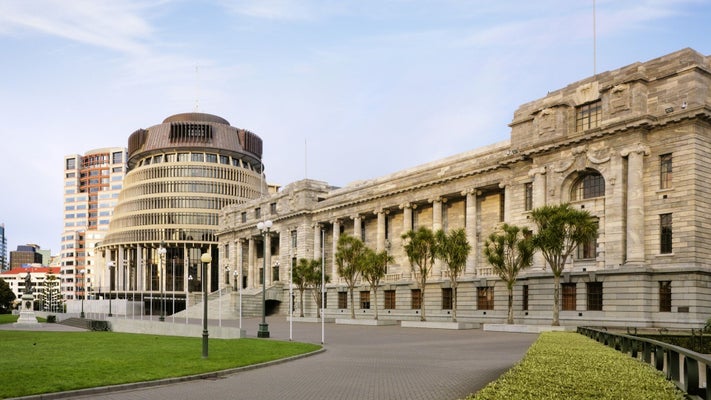
While general election campaign season brings competing promises, the fundamentals that shape investment, development and occupier behaviour in the commercial property sector extend far beyond a three-year political cycle, say industry leaders.
The latest edition of Bayleys’ Total Property brings together perspectives from across the political spectrum on the policies needed to unlock development, attract investment and support sustainable economic growth. This is tempered with commentary from Ryan Johnson, Bayleys national director commercial and industrial, and Leonie Freeman, chief executive of Property Council New Zealand.
Despite campaigning noise, investors, developers and businesses are continuing to make decisions, and are seeking confidence, certainty and a clear pathway for growth from political leaders. The central question is which policies will unlock development, attract capital and support sustainable economic momentum over the long term.
Johnson says investors should remain centred on what is actually occurring in the market, saying that commercial property decisions are shaped by committed infrastructure, occupier behaviour, precinct performance and long-term growth fundamentals, not by short-term political debate.
“Elections matter and may influence sentiment temporarily, but commercial property decisions cannot be based solely on a three-year political horizon. Investors should focus on what is funded, consented and being delivered, as well as occupier demand, infrastructure performance and the long-term economic strength of individual locations.”
Investors should look through campaign rhetoric, and avoid treating unconfirmed political promises as dependable inputs, says Johnson.
“There’s more to the market than a first glance at the headlines might suggest. Bayleys’ commercial transaction volumes are tracking about 10 percent ahead of the equivalent period in 2025, with elevated enquiry from Australian buyers and growing interest from Singaporean capital.
“This reinforces that even in an election year, and despite uneven conditions across the broader economy, the commercial market is still transacting.”
Property Council New Zealand chief executive Leonie Freeman concurs, saying the commercial real estate sector is pushing forward.
“Commercial and industrial investors cannot pause their decisions until polling day. Deals are being weighed, sites assessed and capital allocated right now, against a policy backdrop that has shifted with almost every parliamentary term for the past 30 years.
“That instability, more than any single policy, is what holds the sector back.”
Freeman says major planning, building and seismic policy must be durable and implemented effectively, and identifies infrastructure funding tools as another priority.
“The property sector needs confidence that major reforms, such as planning, building and seismic reform, will be durable, implemented well and not become a political football.
“Stability and certainty are essential to give the sector confidence to plan, invest and keep projects moving through the development pipeline.
“Growth pays for itself when the right financing tools exist, value capture, targeted rates, genuinely independent oversight of development levies, so the cost of new pipes and roads lands fairly, rather than becoming another unpredictable line item on a project’s budget.”
Freeman says councils also need stronger incentives and clearer rules, noting that the consequences extend beyond the property sector.
“Councils need funding tools and incentives, GST sharing, and growth payments that reward development rather than penalise it, alongside clearer rules and greater consistency in how consents and Building Code requirements are applied from one district to the next.
“Get these settings right and the flow-through is faster housing delivery, more competitive industrial and logistics space, and stronger returns across every asset class our members operate in.
“Get them wrong, and uncertainty simply gets priced in, through higher risk premiums, slower deals and more capital sitting on the sidelines.”
With property remaining New Zealand's largest industry, worth $50.2 billion to the economy and accounting for one in every 10 jobs, industry advocate Property Council is ready to work constructively after the election, Freeman says.
“Whichever government forms after the election, our door is open to work through these fundamentals together, because a sector this significant deserves policy settings built to outlast a single term.”
Contact us


